

Globalizing a Financial Powerhouse Before It Was Standard Practice
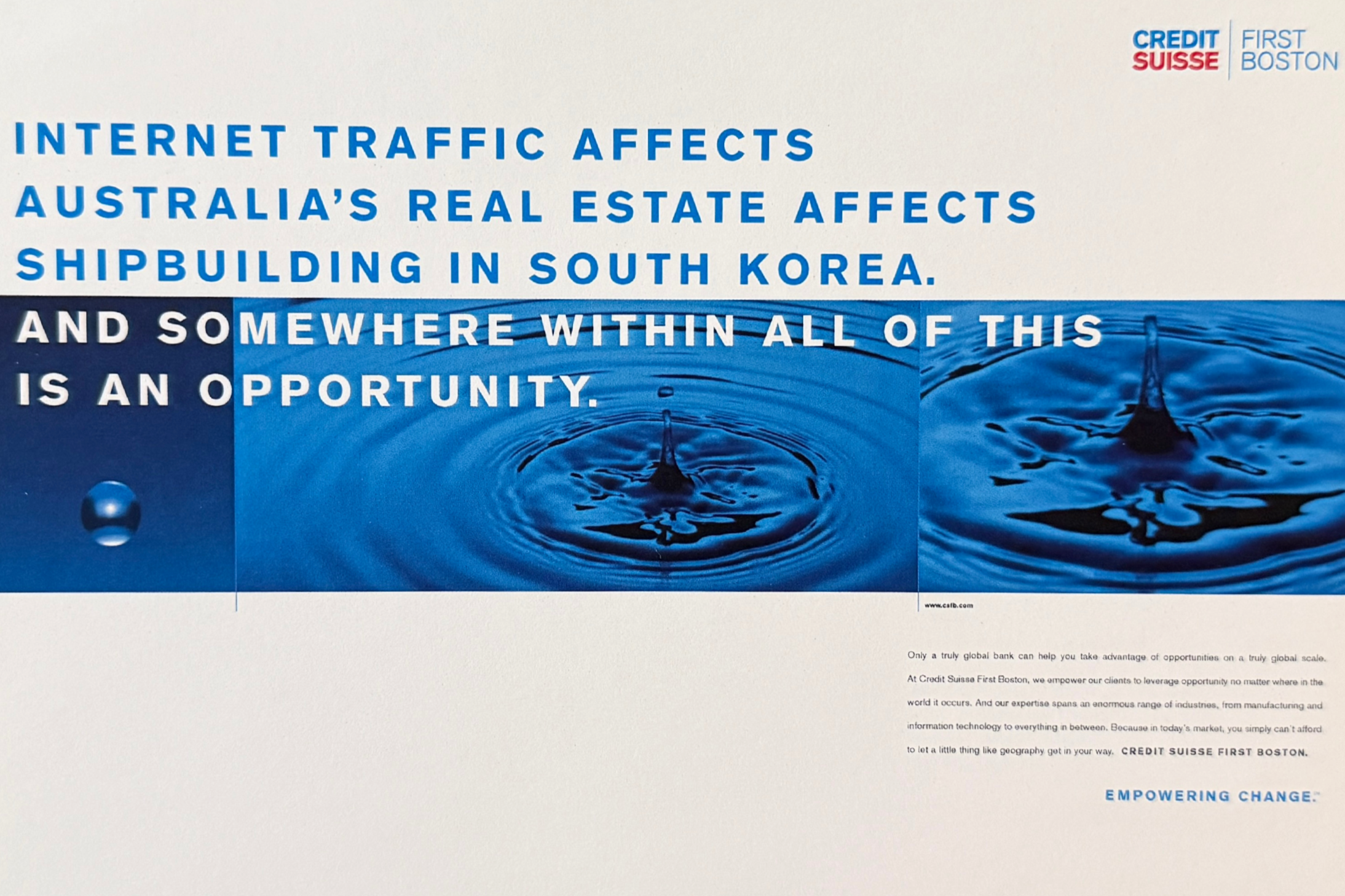
AVP, Global Brand Marketing & Advertising. At 27, I was recruited by Credit Suisse First Boston's newly appointed Global CMO to help centralize marketing across 18 countries and more than 25 divisions during a major period of global expansion and integration. Having previously worked together while I was leading the Britannica.com business at Deutsch, she knew how I approached complex business challenges and believed that perspective would translate well inside a rapidly evolving global financial institution.
The role placed me inside high-level strategic, branding and communications initiatives that fundamentally shaped how I think about transformation, leadership and enterprise strategy.
It was my first opportunity to work inside a truly global enterprise, helping connect business strategy, brand strategy and communications during one of the firm's most transformational periods.
PERSPECTIVE OVER CATEGORY
Over lunch at ABC Kitchen in Union Square, Liz Nickles asked if I would consider joining her team.
By then, our relationship had evolved beyond client and agency partner. She had become an important mentor, someone who consistently challenged me to think bigger about leadership and my career.
I laughed.
"I don't even know what investment banking is."
She smiled and said:
"There are 80,000 people here who understand banking. There isn't anyone here who knows what you know."
That conversation clarified something I had instinctively thought for years but had never heard articulated so directly.
It is easy for me to learn an industry by listening to the people who run it. The real value is knowing what to do with what you hear. Knowing how to ask better questions. Recognizing patterns. Translating complexity into strategy that helps organizations move forward. I’ve been doing this with my clients at the ad agencies I worked at.
Industry knowledge is valuable, but perspective is what could change businesses.
Most organizations default to hiring for category expertise. That often leads to work that simply reinforces existing assumptions. The strongest ideas usually come from bringing a different perspective, connecting patterns across industries, and applying them with clarity and intent.
That belief has shaped every leadership role I've held since.
Launching Empowering Change
This was 2000. Finance did not speak with one voice.
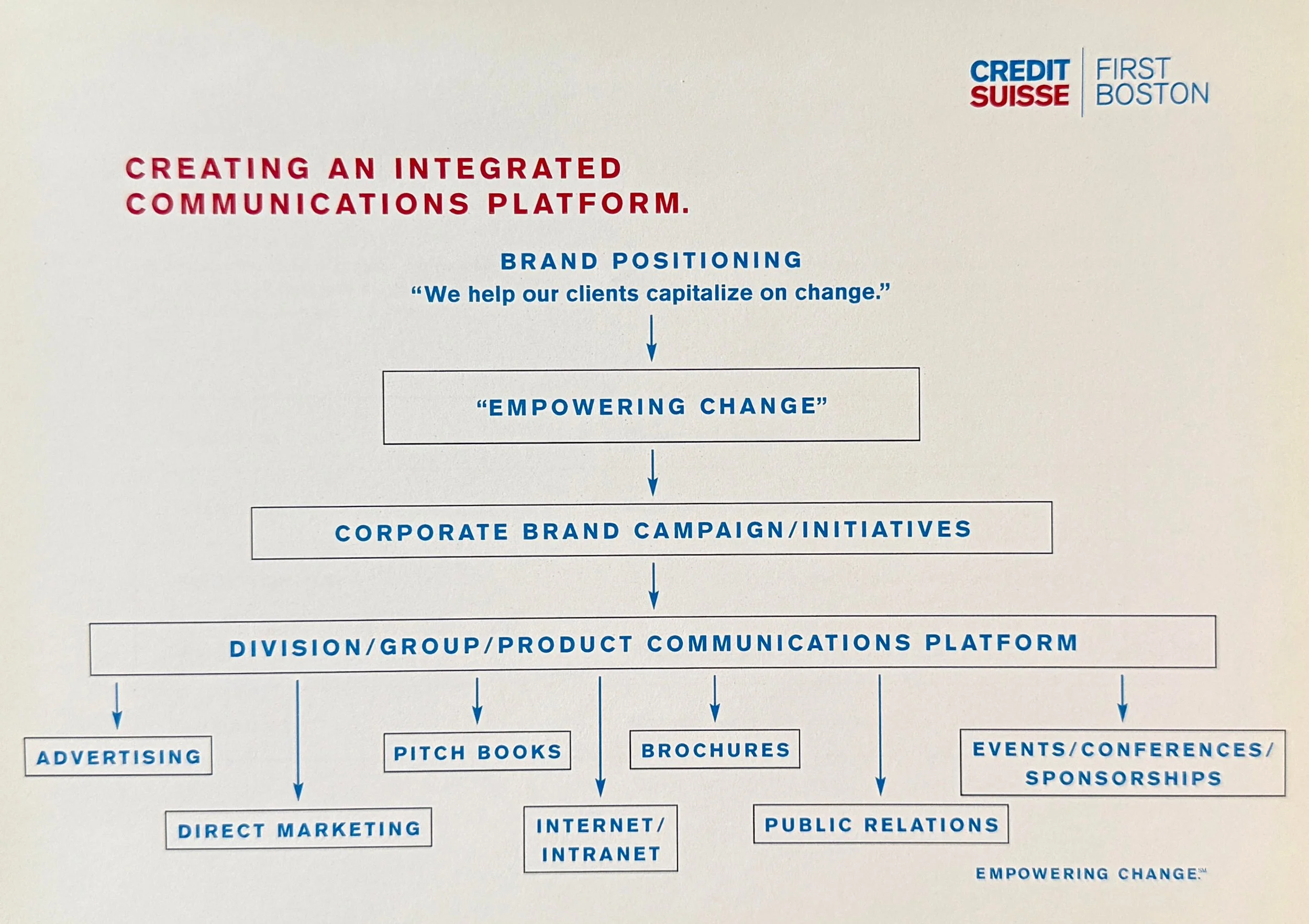
Marketing was fragmented across regions and siloed by business line. Global consistency was rare. The mandate was ambitious: build the firm's first unified global brand strategy, centralize marketing infrastructure, and launch the first true worldwide brand campaign in investment banking.
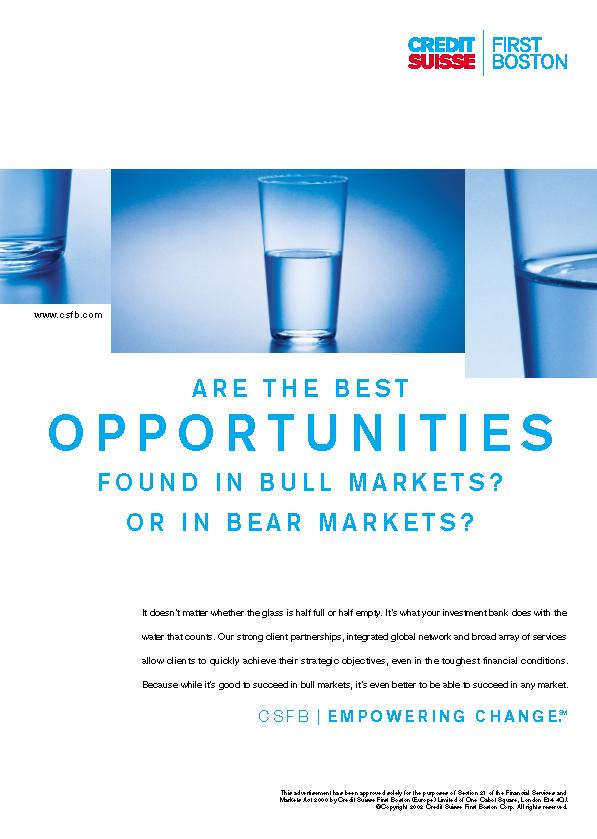
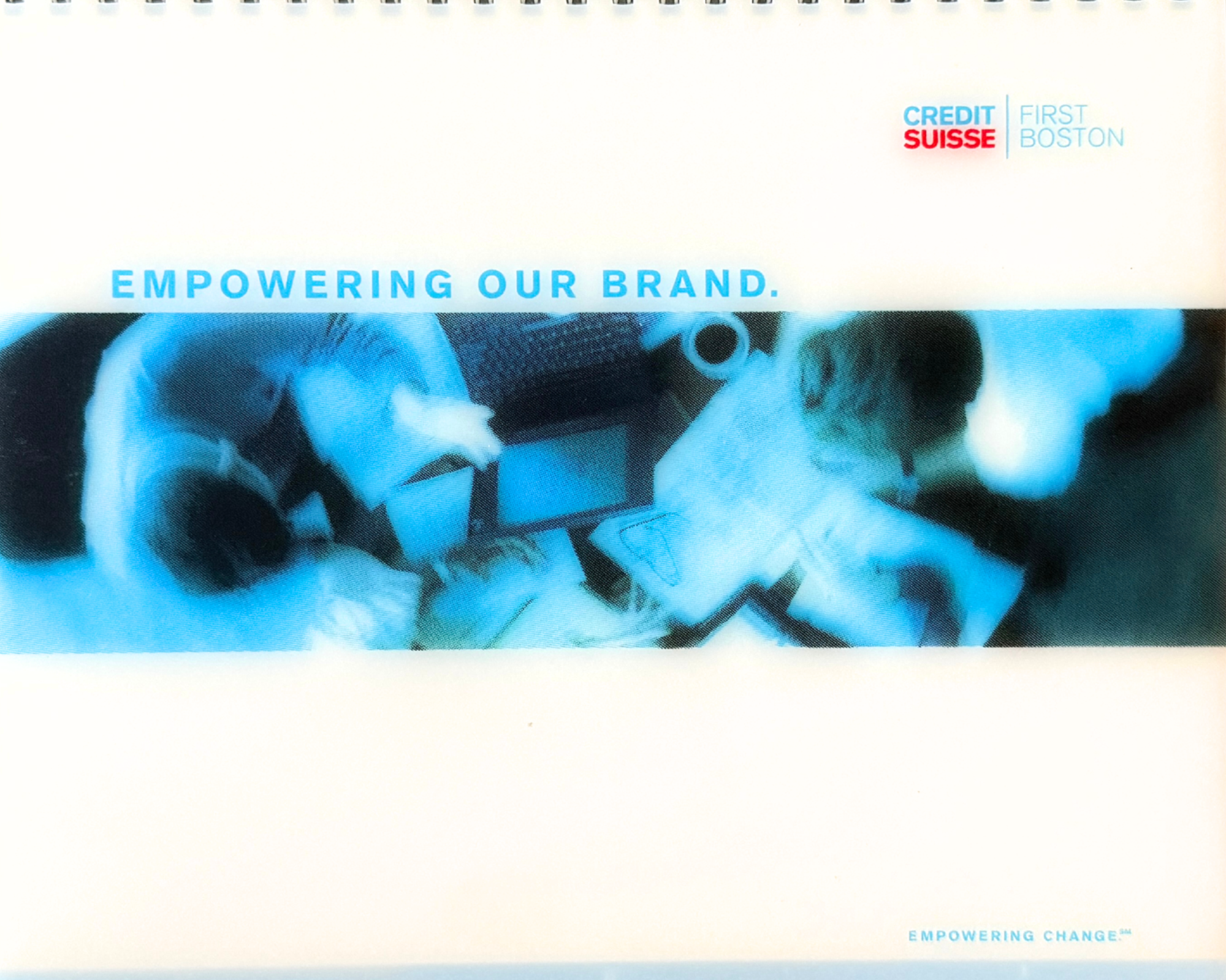
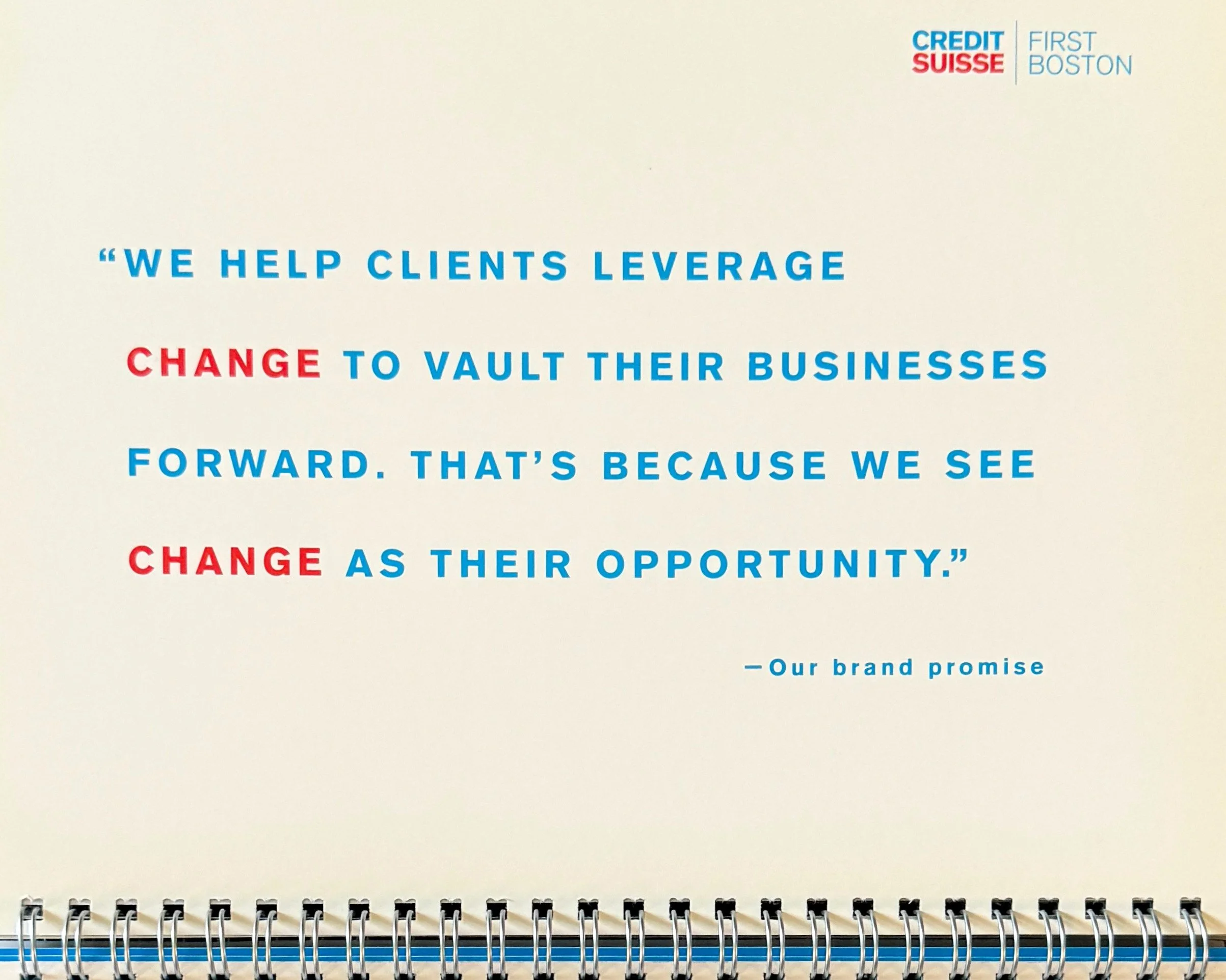
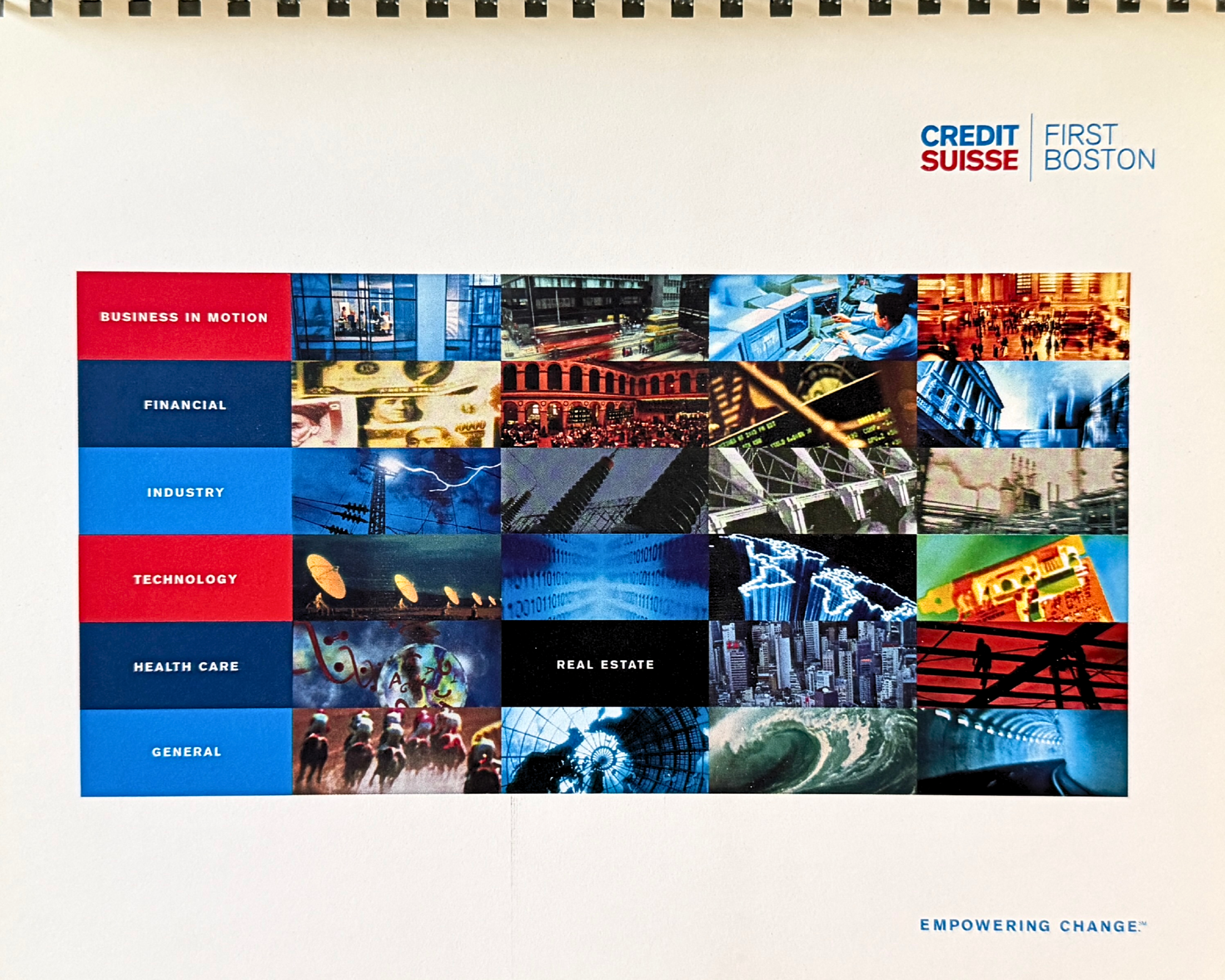
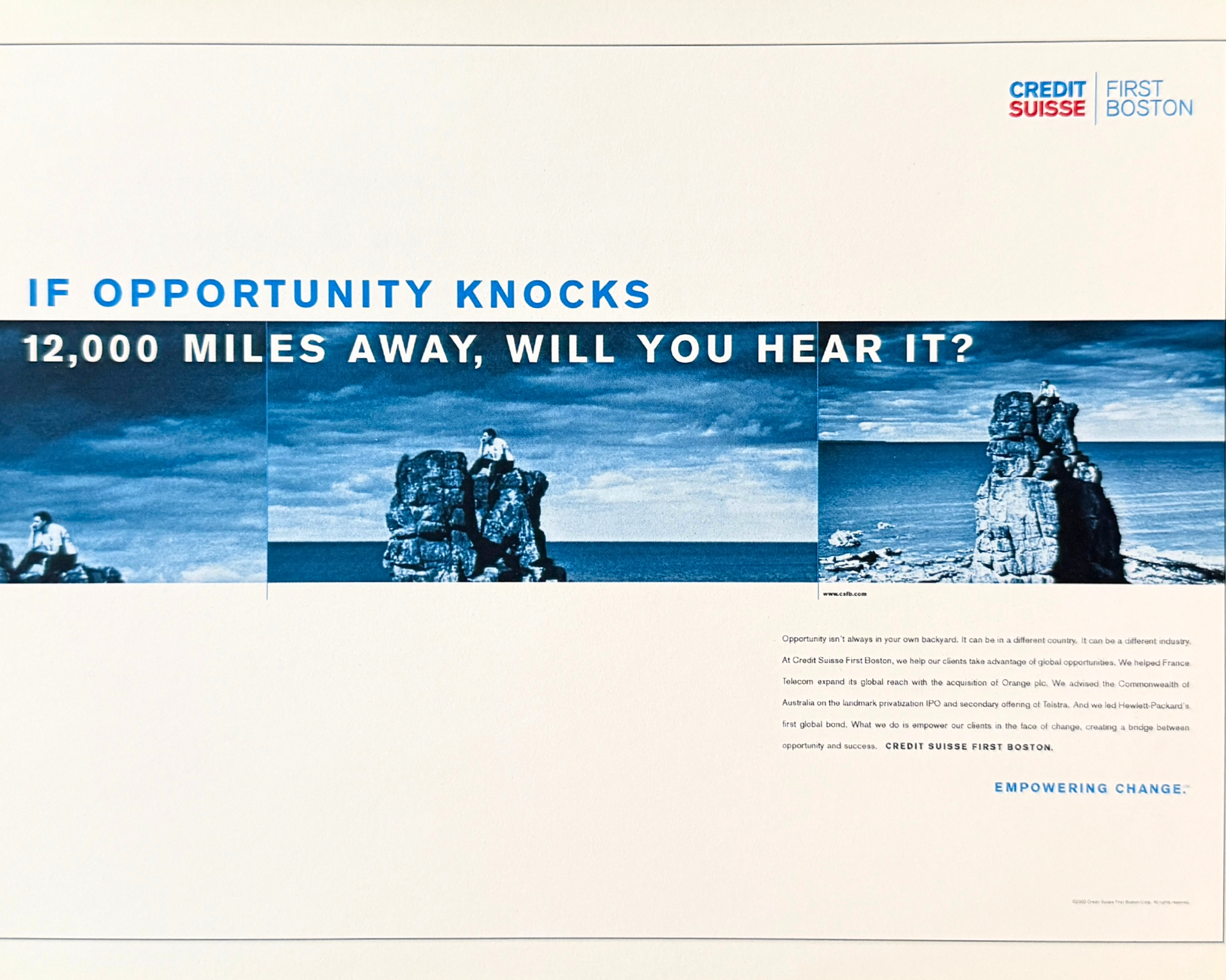
The result was Empowering Change, a $50 million global platform that felt modern, confident, and dramatically different from the category around it.
I led agency relationships, including Kirshenbaum + Bond, and partnered across more than 25 divisions to align global marketing, advertising, and media strategy around one enterprise narrative.
Within months of launch, several major financial institutions began adopting a similar visual language and tone. The category was beginning to shift. That was another turning point for me.
Inside Global Integration
Behind the campaign, an even bigger transformation was happening.
Credit Suisse had recently integrated First Boston, and during my tenure the firm acquired Donaldson, Lufkin & Jenrette. I wasn't leading those integrations, but I had a front-row seat to the brand and communications challenges that came with bringing large, complex businesses together.
It taught me that integration isn't just an organizational exercise. You have to figure out what stays, what changes, where things overlap and how the combined business becomes stronger and easier to understand.
In some ways, those environments felt surprisingly entrepreneurial. Decisions had to be made quickly. Old assumptions had to be challenged. New systems had to be built while the business kept moving.
We developed global brand guidelines and templates, centralized agency and media systems, and frameworks that gave individual businesses and regions flexibility within a common strategy.
Global alignment only worked if people could actually use it.
LEARNING AT GLOBAL SCALE
This was my first corporate leadership role operating globally. I didn't arrive as a banker. I arrived as a brand builder.
I was surrounded by extraordinary technical and financial expertise. My job was to bring a different lens: helping teams translate the firm's broader strategy into clearer, more cohesive marketing and communications, while making it relevant to the businesses they were actually trying to grow.
It changed the scale at which I thought and gave me an early education in something I've carried throughout my career: the more complex the organization, the more important it becomes to make the strategy clear enough for people to act on it.
TAKEAWAY
Credit Suisse was where I learned to operate at global scale.
It taught me how to navigate complexity, work across very different businesses and stakeholders, and help turn an enterprise strategy into something teams around the world could actually use.
And Liz was right. I didn't need to become the banker in the room.
I needed to understand the business, bring a different perspective, and know what to do with what I learned.